

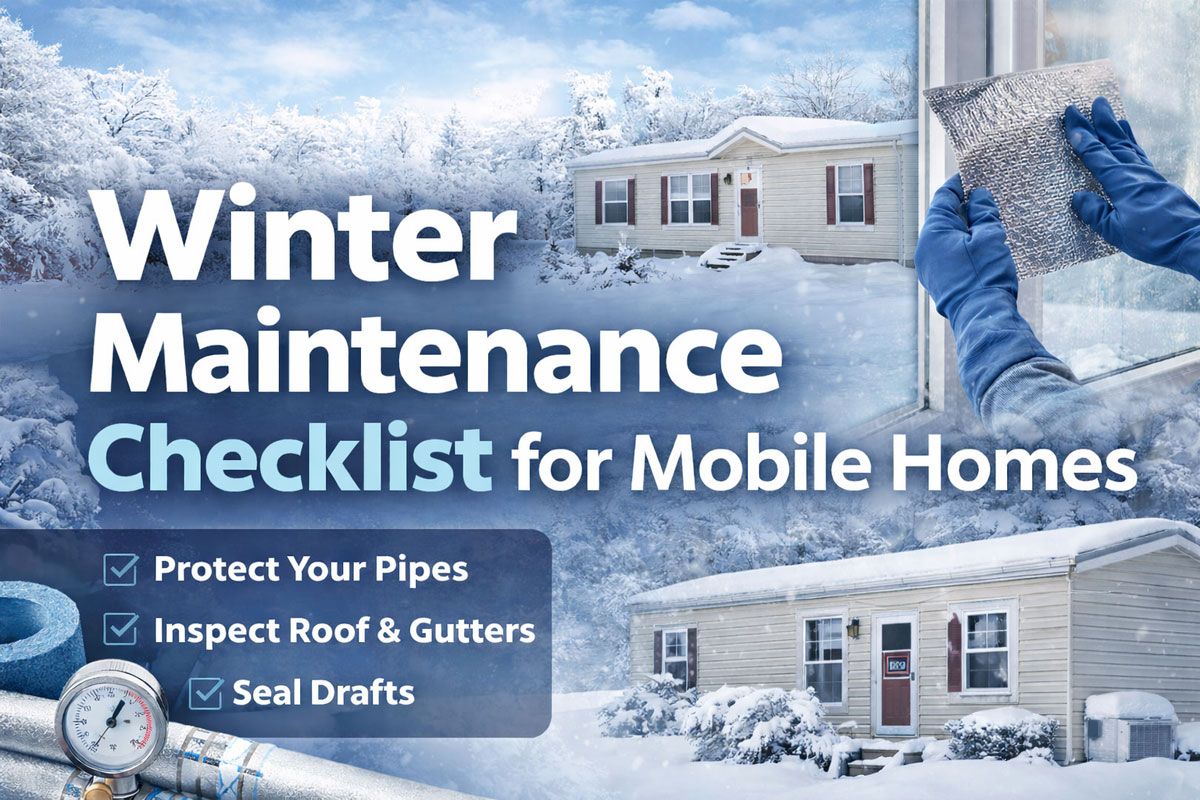
It’s easy to see why mobile homes need extra special care before winter. These structures are lightweight to keep them easily transportable, but the less stable structure and exposed utility lines also make them more fragile.
The good news is that a little maintenance will help you guard against plumbing issues, roof damage, and other repair issues, as well as extend the lifetime of your mobile home.
To protect your property from the damage caused by freezing temperatures, try this winter maintenance checklist for mobile home units. If your unit has already progressed to the point of not being repairable, Banyan Mobile Home Removal offers free removal for qualifying mobile homes.
Step 1: Inspect and Insulate Pipes
Mobile homes come with a range of advantages, but it’s important to take their unique structure into consideration to reap their full benefits and avoid problems down the road. For example, there’s less insulation to protect pipes beneath the mobile home. Check for leaks and schedule plumbing repairs before the weather gets too cold.
The skirting will offer some protection, but you should still surround exposed pipes with foam insulation. Heat tape is another option, but make sure to plug the heat tape into a GFCI outlet to avoid fire hazards.
Step 2: Seal Drafts and Gaps
Consider the age of the dwelling as you go through this winter maintenance checklist for mobile home units. An older home might lack energy-efficient windows and doors, exposing the interior of the unit to harsh temperatures and forceful winds.
Feel for drafts around these entry points. If you notice a temperature variation, seal the gaps with caulk or install new weatherstripping. Check vents and ducts for drafts as well. Cover windows with plastic sheeting to block cold breezes. These steps will help you keep your heating costs lower and more manageable.
Step 3: Service the Heating System
Follow the same HVAC maintenance tips as you would for the heating system in a traditional home. This should start with a professional heating system tune-up and inspection.
Additionally, plan on changing the system’s air filter every month. Furnace maintenance should include replacing batteries in carbon monoxide and smoke detectors. Test each alarm after installing new batteries.
If you install an additional space heater, consult an electrician. They can determine whether the electrical system is sufficient to safely handle the extra energy usage. Make sure to set the space heater on a heat-proof surface to mitigate fire hazards.
Step 4: Inspect the Roof and Gutters
Any good winter maintenance checklist for mobile home care will address the roof and gutters. A professional inspection can identify roof damage and leaks. If your roofer discovers damage, schedule prompt repairs to get ready for wet, wintry weather.
This is also a good time to clean your gutters. Clear gutters will let rainwater flow more smoothly and prevent ice dams. Otherwise, a blocked gutter can cause water to flow over the rim of the gutter and damage the mobile home’s exterior.
Step 5: Check Skirting and Underbelly Insulation
If your mobile home has insufficient or damaged skirting, upgrade this feature before winter. The skirting keeps harsh winds, moisture, and debris from accessing the exposed underbelly of the mobile home. Make sure the underside of the structure has sufficient insulation to prevent electrical damage, frozen pipes, and HVAC issues.
Step 6: Protect Doors and Windows
Even after you seal air leaks in your mobile home, outdoor temperatures can still affect your indoor heating efficiency. To reduce the transfer of heat, hang thermal curtains over all of the windows. Door snakes can keep winter drafts and frigid temperatures from seeping inside.
Step 7: Prepare for Power Outages
Don’t forget to add an electrical system inspection to your winter maintenance checklist for mobile home care. During the inspection, talk to your electrician about guarding against power failures. They might upgrade the home’s electrical panel to accommodate the higher energy usage that comes with heating a mobile home.
Your electrician might also recommend a generator capable of handling your energy needs during a temporary power outage. Having a generator on hand can help you keep the heat functional and power essential equipment in an emergency.
Keep winter storm supplies, such as flashlights and blankets, in an easily-accessible place. Remember to unplug electronics and appliances before storms to prevent electrical hazards.
Step 8: Plan for Long-Term Home Care
Following this maintenance guide every year can help you keep winter damage to your mobile home at a minimum. Even the best-maintained mobile homes can still sustain damage in particularly severe weather, though. Selling a mobile home can be challenging, so when your unit has seen better days, consider a replacement or donation through Banyan’s free mobile home removal program.
FAQs
How Do I Winterize My Mobile Home Plumbing?
Plumbing is a significant concern when it comes to mobile home winter prep. Make sure to check for leaks from your pipes and faucets. Repairing leaks can prevent frozen and burst pipes. Additionally, schedule water heater maintenance. A tune-up and tank flush will prevent many common wintertime water heater malfunctions.
What Temperature Should I Keep My Mobile Home at in Winter?
When it comes to cold weather maintenance, mobile home owners often overlook the importance of the thermostat. Keep the thermostat setting between 60 and 70 degrees throughout the winter. This should provide sufficient heat while maintaining optimal energy efficiency.
Some people lower their thermostats to save energy on a monthly basis. While you can safely lower the thermostat by a few degrees, avoid dropping the setting below 50 degrees. If your mobile home gets too cold, the pipes will freeze and burst. A burst pipe will cost more to repair than the extra money you would otherwise spend on heating.
How Do I Prevent Frozen Pipes in My Mobile Home?
To prevent winter damage, mobile homeowners should ensure all of their plumbing pipes have sufficient insulation. Check for damp or missing insulation. A professional installer can use spray foam insulation and insulated plumbing sleeves to protect your pipes. Additionally, make sure you seal gaps in the skirting to prevent drafts.
How Often Should I Inspect My Mobile Home Roof?
While you can follow some mobile home winterization tips on your own, you should hire a roofer to inspect the unit’s roof. They have the skills and equipment necessary to provide a safe and thorough inspection. If you have roof or gutter damage, the roofer can recommend repairs and provide estimates for the required work.
Can Banyan Remove a Damaged Mobile Home for Free?
When it comes to no-cost mobile home moving, Banyan is a leader in the industry. We offer a simple, straightforward process for free mobile home removal after damage. As a 501(c)(3) nonprofit organization, you can trust that we’ll use your mobile home donation to help families in need. In return, you can use the donation as a tax deduction.
Maintenance Can Extend the Lifetime of Your Mobile Home
Preparing your mobile home for harsh winter conditions will protect its structure, finish, and equipment. Your mobile home will last longer and provide many more years of enjoyment with routine maintenance.
When the repairs and upkeep become too costly, replacing your mobile home is often the best option. Our free mobile home removal program can offer a stress-free path forward. Contact us to see if your mobile home qualifies for free removal or donation today.