

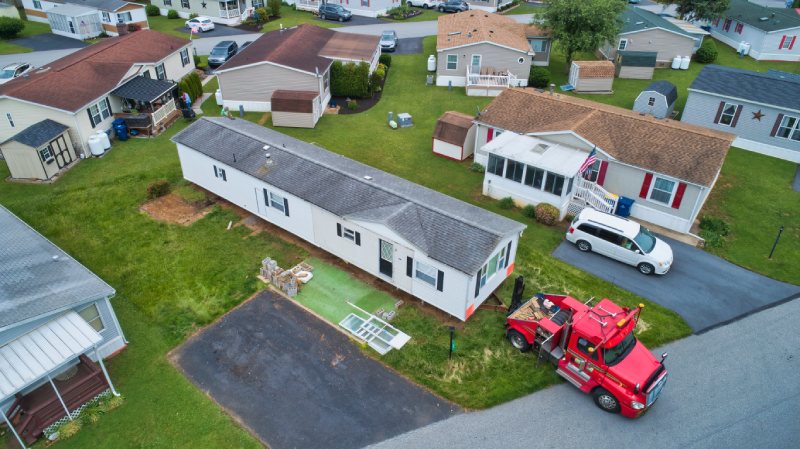
In Short: Moving a mobile home legally requires five things: a county moving permit, a licensed and insured mobile home mover, compliance with HUD transport and safety codes, zoning approval at the destination, and a match between the home’s HUD wind zone and its new location. Requirements also vary by state — Georgia, Missouri, Florida, Alabama, and Kentucky each add their own rules, covered below.
Understanding The Complexities of Moving a Mobile Home
Moving a mobile home or manufactured home is not a simple DIY project. Because these homes are transported on highways and require special setup at a new site, nearly every U.S. state enforces specific laws and permit requirements to ensure safety and legal compliance.
While the basic requirements are similar across many states, the exact rules can vary depending on the age of the home, the width or weight of the load, and local zoning or building code restrictions.
In this article, we walk you through the necessary steps to legally move a mobile or manufactured home, including how to meet permit and title requirements, and what to expect during the moving and setup process.
Law #1: Obtain a Moving Permit
A moving permit is required to transport a mobile or manufactured home. The permit confirms that the home is legally eligible to move and that there are no outstanding tax or ownership issues.
While the process to get a permit is straightforward, it does take time, so it is best to complete this step early in your planning. Permit costs vary by county, but they’re just one line item in the overall cost to move a mobile home — see our breakdown of the average cost to remove a double-wide mobile home for the full picture.
To obtain a moving permit, you will generally need two documents:
- Tax Certificate: This document verifies that all property taxes on the home have been paid. It is issued by the county tax office or county treasurer. A mobile home with unpaid taxes cannot legally be moved.
- Title Certificate: You must also provide proof of ownership. This is usually the title to the mobile home, or a certified copy of it.
If you do not have the original title, you can submit an application for a duplicate through the state Department of Motor Vehicles (DMV) or the agency that handles manufactured home titles in your state.
Once both documents are provided, the county will issue the moving permit. Without this permit, a mover cannot legally transport the home on public roads.
Law #2: Hire a Licensed Mobile Home Mover
A mobile or manufactured home cannot be moved by the homeowner or by a general towing company. State laws require the home to be transported by a licensed and insured mobile home mover.
This is because moving a manufactured home involves structural bracing, oversize load planning, and specialized equipment that most general transport companies do not have.
Licensed movers are required to have the correct state transport license, carry liability insurance, and use equipment designed specifically for manufactured homes. They are also responsible for complying with width, height, and weight restrictions, determining the appropriate travel route, and obtaining any oversize load permits if the home is larger than the standard roadway limits.
This requirement exists to ensure road safety. Manufactured homes are large, often wider than a standard traffic lane, and can become unstable or sustain damage if not prepared and secured correctly. Professional movers are trained to brace the home, secure the structure for travel, and transport it safely.
Attempting to move a mobile home without a licensed mover can result in fines, permit denials, and the home being stopped during transport. For this reason, hiring a licensed mover is a legal requirement in every state.
Law #3: Meet Transport and Safety Code Requirements
Before a mobile or manufactured home can be moved, it must be in a condition that is safe for transport. This typically means the home must meet federal HUD standards or applicable state building codes.
Homes that are older, damaged, or deteriorating may need repairs or reinforcement before they can be moved. A home that is not properly secured can shift, break apart, or shed panels during transport.
Because mobile homes are large structures traveling on public roads, loose siding, roofing material, or unsecured components can create hazards for other vehicles. To prevent this, most counties require either a code inspection or a mover’s structural safety review before issuing the final permit.
In practice, this may include checking that:
- The frame is stable and free of major rust or cracks
- Exterior panels and roofing are secured
- Windows and doors can be locked during transport
- Axles, wheels, and tires are in usable condition
- Tie-down points are intact and ready for bracing
If a home is in poor condition, temporary reinforcement may be required before the move. In some states, particularly where building codes are stricter, homes built before June 15, 1976 (pre-HUD code) may not be eligible for relocation unless a safety inspection confirms they can be transported without risk.
If your mobile home doesn’t meet current transport and safety code, moving may not be worth the cost — demolition might be the better route. Find out how many dumpsters you’ll need to demo a mobile home before deciding
If you are unsure whether your home meets these requirements, a licensed mover or local inspection office can review the structure and advise on any necessary repairs.
Law #4: Get the New Location Approved
Even if you have a moving permit and a licensed mover, you cannot install a mobile home on just any piece of land or in any park. The home must meet the zoning, placement, and installation regulations of the destination location.
Local zoning ordinances determine:
- Whether manufactured homes are allowed on the property
- What size, age, or HUD-code standards the home must meet
- Whether the property requires a specific foundation or tie-down system
- Minimum setbacks from property lines, roads, or utility easements
If you are moving into a mobile home park, the park may also have its own rules, such as limits on the age of the home, exterior condition requirements, color or siding guidelines, or restrictions on additions like porches and sheds.
If you are placing the home on private land, you will likely need:
- A set-up or installation permit
- A foundation inspection
- Approval for water, sewer, septic, or utility hookups
Failing to confirm zoning can lead to serious problems, including fines, denial of installation, or being forced to move the home again.
Checking zoning rules before planning the move is one of the most important steps in the process.
Law #5: Match HUD Wind Zone Requirements
Every manufactured home in the United States is assigned a HUD wind zone rating based on where it was originally installed. Wind zones indicate the minimum wind speeds a mobile home is designed to withstand. The country is divided into three wind zones:
- Zone I: Standard wind exposure
- Zone II: Moderate to high wind exposure
- Zone III: Hurricane-prone coastal and shoreline regions
These zones matter because a mobile home cannot be moved from a lower wind zone into a higher wind zone.
For example, a home originally built and certified for Zone I cannot be relocated into a Zone II or Zone III region. This protects homeowners and surrounding communities by ensuring the home can safely withstand local weather conditions.
However, moving from a higher zone to a lower zone is allowed. A home built for Zone III can be placed in any zone, because it already meets stronger safety and anchoring requirements.
The wind zone rating for your home is printed on the HUD Data Plate located inside the home (often in a bedroom closet, kitchen cabinet, utility room, or electric panel). The mover or county permitting office may also ask for the home’s HUD certification label located on the exterior metal plates.
If the home does not meet the wind zone requirements for the destination location, the permit to move will not be approved. In that case, the home can either remain in place, be moved to a location within the same wind zone, or be removed and disposed of instead of relocated.
Want to Skip All of This?
Between permits, licensed movers, safety codes, and inspections, moving a mobile home legally takes real time and money. Donate it instead, and Banyan Mobile Home Removal handles all the paperwork and hauls it away for free.
Donate Your Mobile Home →
State-Specific Laws for Moving a Mobile Home
Georgia Mobile Home Moving Laws
Good news! In Georgia, there are no specific laws that are more demanding than the laws that we’ve outlined above. The main requirement in Georgia is to make sure that it is moved by certified movers in a vehicle made for heavy loads, and that the driver has a commercial driver’s license (CDL). And, because you’re moving with Banyan as your moving company, we’ve got that covered.
Moving a Mobile Home in Georgia?
Skip the permits, licensed movers, and paperwork entirely — donate instead and Banyan will remove it for free.
See Free Mobile Home Removal in Georgia →
Missouri Mobile Home Moving Laws
The only additional laws that apply to moving a mobile home in Missouri are in relation to the size of the mobile home. If the home is more than 12’4” wide or more than 150’ long you will need to have an oversize permit for the removal of the home.
Moving a Mobile Home in Missouri?
Before you deal with permits and transport rules, find out if your home qualifies for free removal instead.
See Free Mobile Home Removal in Missouri →
Florida Mobile Home Moving Laws
Florida mobile home relocation states that a mobile home that is more than three years old will need to be pre-inspected for building codes before the permit to move can be issued. However, if a mobile home is older than 1976 it may not be moved unless it is a forced move.
Moving a Mobile Home in Florida?
Florida’s wind-zone and permitting rules make moving costly — donation skips all of it, for free.
See Free Mobile Home Removal in Florida →
Alabama Mobile Home Moving Laws
In Alabama, the same rules mentioned above must be followed, but if you are going to move the mobile home on a highway you need to have a move permit from the office of the License Commissioner. This can only be obtained through the Michael Square office of the Mobile County License Commission, in Mobile, AL.
Moving a Mobile Home in Alabama?
If the permits and licensed-mover requirements feel like a hassle, donation is a free, hassle-free alternative.
See Free Mobile Home Removal in Alabama →
Kentucky Mobile Home Moving Laws
Kentucky laws regarding moving manufactured homes require that the home and truck together cannot have a combined length of more than 120’. The home itself cannot be more than 90’. It cannot be more than 16 feet wide, and 13’6” in height. Fortunately, very few mobile homes were ever manufactured greater than this size.
Moving a Mobile Home in Kentucky?
Avoid the licensing, inspection, and transport-permit process altogether — see if your home qualifies for free removal.
See Free Mobile Home Removal in Kentucky →