

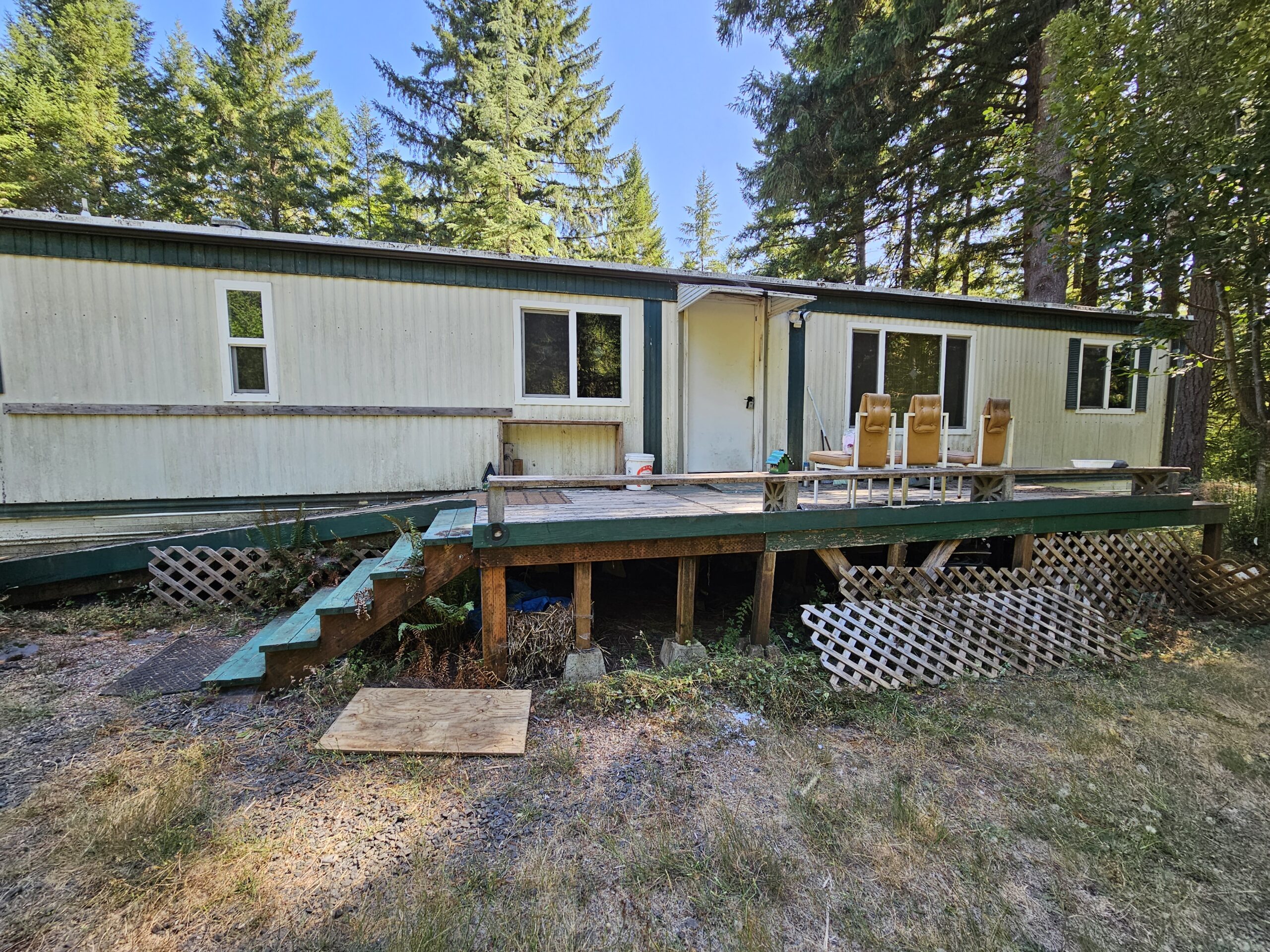
Mobile homes typically last 30-55 years with proper maintenance and care. However, the actual lifespan of these homes depends on several factors that can either extend their life well beyond expectations or significantly shorten it.
From our experience in mobile home removal, we’ve seen both pre-HUD homes from the 1960s that were exceptionally well-maintained and modern manufactured homes barely 15 years old requiring replacement or removal. Modern mobile homes that are built to HUD Code standards since 1976 are significantly more durable than older mobile homes. However, the actual lifespan still varies greatly based on climate, construction methods and quality, and maintenance practices.
In this guide, you’ll learn how long single wide and double wide mobile homes last, key factors that determine the lifespan of these mobile homes, and essential maintenance practices that can extend your home’s life.
Do Mobile Homes Have a Shelf Life?
Like any type of housing, mobile homes aren’t designed to last forever. But they also don’t have a strict “expiration date.”
The lifespan of a mobile home depends largely on when they were built, how they were installed, and how well they’ve been maintained over time.
Older mobile homes built before the 1976 HUD Code often have shorter lifespans because they were not required to meet uniform construction or safety standards. Modern manufactured homes built under HUD regulations can last 50 years or more when properly cared for.
While every mobile home has a practical shelf life, quality materials, good maintenance, and proper site placement can significantly extend how long it remains safe, efficient, and livable.
How HUD Standards Affect Mobile Home Lifespan
Modern mobile homes must comply with the U.S. Department of Housing and Urban Development (HUD) code. This federal standard regulates design, construction, strength, and safety features that directly influence how long a home lasts.
Some of the key requirements for mobile homes are:
- The minimum size of a mobile home (called a “manufactured home” after 15th June 1976) must be 400 square feet
- The home must have a ceiling at least 7 feet above the floor in bathrooms and habitable rooms. For the storage area(s) and hallway(s), a minimum floor-to-ceiling clearance of 6-and-a-half feet is required.
- Floor area of at least 50 square feet for a single-person bedroom. A two-person room must have a minimum of 70 square feet of area.
- Bathrooms and kitchens must have a mechanical ventilation system
- Every room must have a window that leads outside
- Units must have at least two outside spaces—12 feet for a single-wide and 20 feet for a double-wide
These rules ensure that every manufactured home built under HUD standards meets modern expectations for livability, comfort, and long-term durability.
HUD Design Zones for Longevity
To help homes withstand different regional climates, HUD divides the U.S. into three design zones:
Wind Zones
Homes built for coastal and high-wind areas must include reinforced frames, anchoring systems, and stronger wall structures to resist hurricanes and storms.
Thermal Zones
The HUD Code divides the United States into three thermal zones based on average temperature.
Each zone has a U value (proportional to the average temperature) assigned to it; a measure of how much heat is transmitted or leaked through a house. Each zone requires different insulation and construction standards to help regulate indoor temperatures efficiently.
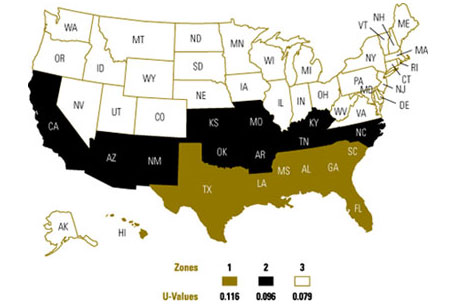
Image source: Manufactured Housing Institute
- Zone 1 (Brown): Hot southern regions such as Texas, Florida, and Louisiana. Homes in this zone are designed to repel heat, using lighter insulation and reflective materials to keep interiors cool.
- Zone 2 (Black): Moderate climates found across much of the central United States. Homes in this area balance insulation and ventilation to handle both warm summers and cool winters.
- Zone 3 (White): Northern states and colder regions. Homes built for this zone include thicker insulation, insulated windows, and sealed duct systems to retain heat and protect structural materials from freeze damage.
Choosing or placing a home designed for the correct thermal zone is crucial. A mismatch, such as relocating a Zone 1 home to a Zone 3 area can drastically reduce comfort, energy efficiency, and overall lifespan.
Roof load zones
Roof load is based on how much snowfall an area experiences per year. HUD uses pounds of snow per square foot (PSF) as a measure of how much snow load the roof can hold.
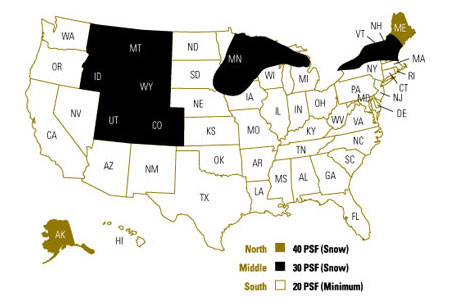
Image source: Manufactured Housing Institute
- North Zone (40 PSF): Homes built for northern and mountainous states such as Montana, Maine, and parts of New York are designed for heavy snow loads. These roofs use reinforced trusses, thicker decking, and steeper pitches to shed snow safely.
- Middle Zone (30 PSF): Covering much of the Midwest and central U.S., this zone requires moderate structural strength for periodic snow and ice accumulation.
- South Zone (20 PSF Minimum): Found across southern states with mild winters, homes here are built for light roof loads, focusing more on ventilation and heat resistance than snow durability.
Therefore, if a manufacturer intends to sell a home to either of those states, the roof has to be sturdy enough to withstand the weight of the snow for years and decades.
Materials Used in Construction
Modern manufactured homes use many of the same materials found in traditional site-built houses, but they’re engineered to be lighter and more transportable. The type and quality of these materials play a major role in determining how long a home will last. Common structural materials for mobile homes include:
- Steel: Used for the home’s frame and chassis, providing strength and stability during transport and setup.
- Wood: Commonly used for wall studs, floor joists, and roof trusses. Pressure-treated and kiln-dried lumber helps prevent warping and decay.
- Plywood or Oriented Strand Board (OSB): Often used for subfloors and sheathing. OSB is lightweight and cost-effective but can weaken if exposed to prolonged moisture.
- Vinyl and Aluminum Siding: These materials resist corrosion and are easy to clean, though high-quality vinyl generally lasts longer and requires less upkeep.
- Asphalt Shingles or Metal Roofing: Shingles typically last 15–30 years, while metal roofing can last over 40 years with proper care.
The insulation type also varies by region and affects long-term comfort and energy costs:
- Fiberglass and foam insulation are most common, offering solid energy retention when properly installed.
- Homes built for colder zones often feature double-pane windows, vapor barriers, and thicker wall insulation to prevent heat loss.
High-quality materials don’t just make a home look better, they extend its lifespan by resisting moisture, heat, and structural stress.
Cheaper materials may save on upfront costs but often lead to more frequent repairs, roof replacements, or structural deterioration over time.
Construction Methods
Unlike traditional houses built on-site, manufactured homes are assembled in controlled factory environments, where each section is constructed according to HUD standards and then transported to the home site.
1. Factory Construction
Every home begins with a steel chassis, which serves as the foundation and allows the home to be moved. Floors, walls, insulation, and roofing are added in sequential stages under strict quality control, protecting materials from weather exposure during the build.
Because the process happens indoors, factory-built homes are less prone to issues like warped wood or moisture damage — problems that often affect site-built construction.
2. Transportation and Setup
Once the home sections are completed, they’re delivered to the property and placed on a temporary or permanent foundation system, such as:
- Concrete piers or slabs for stability
- Block supports or steel anchors to secure the home and resist shifting
- Skirting to enclose the foundation and protect plumbing and wiring from weather and pests
Proper installation is critical. A poorly leveled foundation or loose anchoring can cause door misalignment, wall cracks, and structural stress over time.
3. Utility Connections and Finishing
After setup, technicians connect electricity, plumbing, and HVAC systems. In double-wide homes, the two sections are joined and sealed at the center seam to form a unified structure.
When built and installed correctly, manufactured homes can withstand decades of use but even small errors in setup or maintenance can shorten their lifespan considerably.
Main Factors That Affect How Long Mobile Homes Last
While the average mobile home can last anywhere from 30 to 55 years, its actual lifespan depends on how it was installed, maintained, and protected from environmental stress over time.
1. Initial Installation
Proper site preparation is critical to a mobile home’s long-term stability. A well-leveled foundation and good drainage prevent moisture buildup and ground shifting, which can cause:
- Cracked walls and ceilings
- Uneven or soft floors
- Doors and windows falling out of alignment
Installing on a sloped or poorly drained lot allows water to collect beneath the structure, eventually leading to rot, mold, or corrosion in the frame.
2. Foundation Problems
The foundation system is the single most important structural element after the home itself. Mobile homes that rest on concrete piers or slabs and are properly anchored typically last decades longer than those on temporary block systems. Loose or unstable supports can make the home shift slightly each season and increase wear on floors, walls, and joints.
3. Weather and Water Damage
Moisture is one of the biggest threats to a mobile home. Leaks in the roof, windows, or plumbing can quickly lead to rotting subfloors, wall separation, and black mold growth.
At Banyan, we have seen homes where long-term leaks caused severe mold infestations, rendering the structure unsafe or even condemned by local authorities.
Preventing water intrusion is the simplest way to extend your home’s life:
- Seal roof seams and window edges regularly
- Use gutters and skirting to direct water away from the foundation
- Address leaks immediately to avoid deeper structural issues
4. Maintenance and Upkeep
Neglect accelerates aging faster than any single factor. Regular inspections especially after storms, floods, or freezes can help identify small problems before they become expensive repairs.
Routine tasks such as repainting, sealing joints, replacing caulking, and servicing HVAC systems can add years to a mobile home’s usable life.
5. Quality of Materials and Construction
Homes built with heavier frames, treated lumber, and thicker insulation last longer and resist climate stress better.
Lower-cost models that cut corners on structure or roofing may require earlier replacement or extensive repairs within 15-25 years.
How to Extend the Lifespan of Your Mobile Home
Even though manufactured homes have an average lifespan of 30-55 years, proper care and regular maintenance can significantly extend that timeline. With consistent upkeep, it’s not uncommon for a well-built mobile home to remain in great condition for 50 years or more.
1. Choose the location of your mobile home wisely
The environment plays a big role in how long a mobile home lasts. Homes in dry, moderate climates like Arizona, Utah, or Nevada often age more slowly than those in humid or coastal regions such as Florida or the Gulf Coast. Moisture, salt air, and extreme temperature swings all accelerate wear.
When selecting a site, make sure:
- The ground is well-drained and stable.
- The home is elevated slightly to keep water from pooling beneath.
- The home isn’t placed too close to trees or overhanging branches that can damage the roof or siding.
2. Schedule regular mobile home inspections by professionals
Have your home professionally inspected every few years, especially after severe weather. Inspectors can spot early warning signs such as:
- Foundation settling or shifting
- Roof leaks or soft spots
- Loose anchoring or cracked skirting
- Damaged insulation or vents
Early detection is key to preventing minor issues from becoming structural problems.
3. Address problems immediately as they develop
The single most important factor is regular and quick maintenance. Small leaks, cracks, or soft floors rarely stay small. Repairing issues promptly keeps them from spreading and protects your home’s framework from water or pest damage. Banyan has seen many homes that were saved from demolition simply because owners fixed roof or window leaks early, preventing long-term mold and rot.
4. Upgrade your utility appliances
Modern appliances and systems are more energy-efficient and place less strain on electrical and plumbing infrastructure. Replacing old water heaters, HVAC units, and wiring helps your home run more safely and efficiently while maintaining resale value.
5. Protect the exterior
A fresh coat of paint or sealant every few years protects siding and trim from weather damage. Keep gutters clear and make sure water flows away from the home. Vinyl or metal siding should be cleaned regularly to prevent buildup that can trap moisture.
When It’s Time to Replace or Donate Your Mobile Home
Even with excellent maintenance, every mobile home eventually reaches the end of its usable life. Severe structural damage, long-term water intrusion, or outdated systems can make repairs more expensive than replacement.
When that happens, donating your mobile home is often a smarter and more cost-effective option than paying for demolition or removal.
Through Banyan Mobile Home Removal, an accredited 501(c)(3) nonprofit organization, homeowners can have their old or unwanted mobile homes removed for free, while helping families in need.
With Banyan Mobile Home Removal, you will:
- Save thousands of dollars on removal, hauling, and landfill costs
- Receive a tax deduction equal to your home’s fair market value
- Avoid the hassle of hiring demolition or towing contractors
- Support communities in need by giving your home a second life as training or transitional housing
Banyan handles everything from the paperwork and inspection to safe, compliant removal at no cost to you.
If your mobile home is still in reasonable condition, donating often outweighs the cost of removal and lets you clear your property responsibly while making a meaningful impact.
Call or contact us today to see if your home qualifies for free removal and donation.